The Empire of the Prosauropods by the Dinosaur Collector
In the Late Triassic and Early Jurassic cycadoids or bennettities are the characteristic plants and prosauropods are the characteristic animals. Generally medium to low in height they are thought to be slow growing with foliage high in toxins and generally of low food value. Superficially cycadoids resemble cycads which become more common later in the Jurassic declining in the Cretaceous but still surviving today. Some are slender with branching trunks vaguely palm like while others look like pinecone with leaves on top. Older Paleozoic flora like the giant club Moss and horsetails still are present in wet areas but they steadily decline and primitive conifers and ferns are present. The world continent Pangea is still mostly intact. Gondwanaland and Laurasia are just starting break away. Both flora are fauna are similar around the world indicating that no barriers existed to isolate populations. Prosauropods are the most common dinosaurs from latest Triassic to the end of the Early Jurassic. prosauropods and stegosaurs have the distinction of being the only major groups to die out before the end of the mesozoic. The climate is arid relieved only by megamonsoons. The environment was alternately baked then flooded. The Plateosaurus and Coelophysis bone beds from this time are thought to be the result of flash floods. update 091206
Prosauropods show up in the fossil record as fairly large animals in the Carian and are supposed to have evolved from smaller animals. The are the most common large animals for 50 million years. They are best known as the only family besides the stegosaurs to become extinct before the end of the Mesozoic. They don't get much attention. They diversify and evolve many smaller forms like Anchisaurus and larger animals similar to the sauropods.
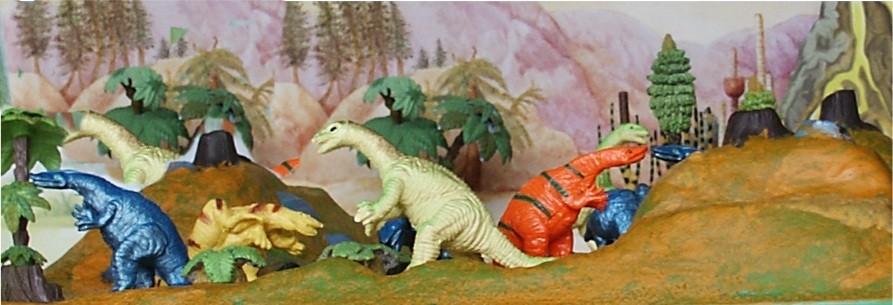
A selection of Rinco dinosaurs that have a prosauropod look. The blue are from gum ball machines the striped figures are sold in bagged sets. The green figures are from Wai made in China.
Phytosaurs (plant lizards) are important predators in the wetter parts of Northern Laurasia. They belong to the same group of archosaurs as crocodiles and aetosaurus. While phytosasurs looked and probably lived like todays freshwater crocs they evolved their features separately. The long jaws are made up of the premaxillae while crocs jaws are made from the maxillae. The most noticeable difference is the phytosaurs have the nostrils in a mound in front of the eyes not at the end of the snout.
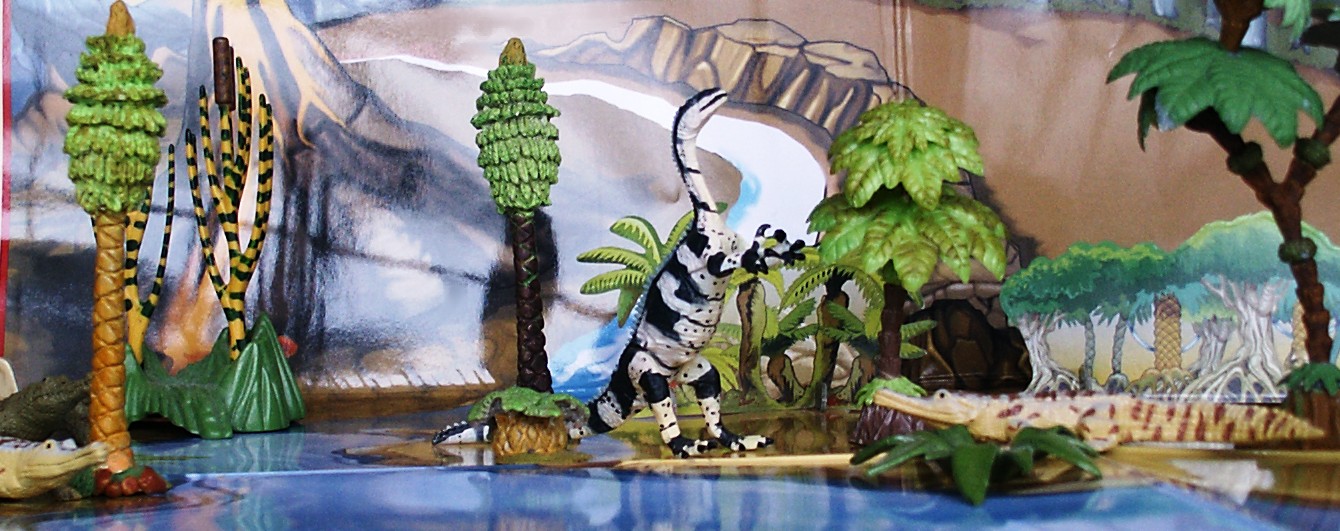
Kaiyodo Choco Egg series 5 Plateosaurus.
While the ornithisuchids and rauschids continued to share the top predator
slot with dinosaurs, dinosaurs take over the small to medium carnivore roles
and prosaurapods take over the herbivore category. Ornithosuchus (bird
crocodile) was 14 feet long and once considered an early dinosaur, now as an
advanced archosaur closely related to the dinosaurs. It
could walk upright but probably usually moved on all fours. Its hips, toes and
back armor were primitive, but the skull quite advanced.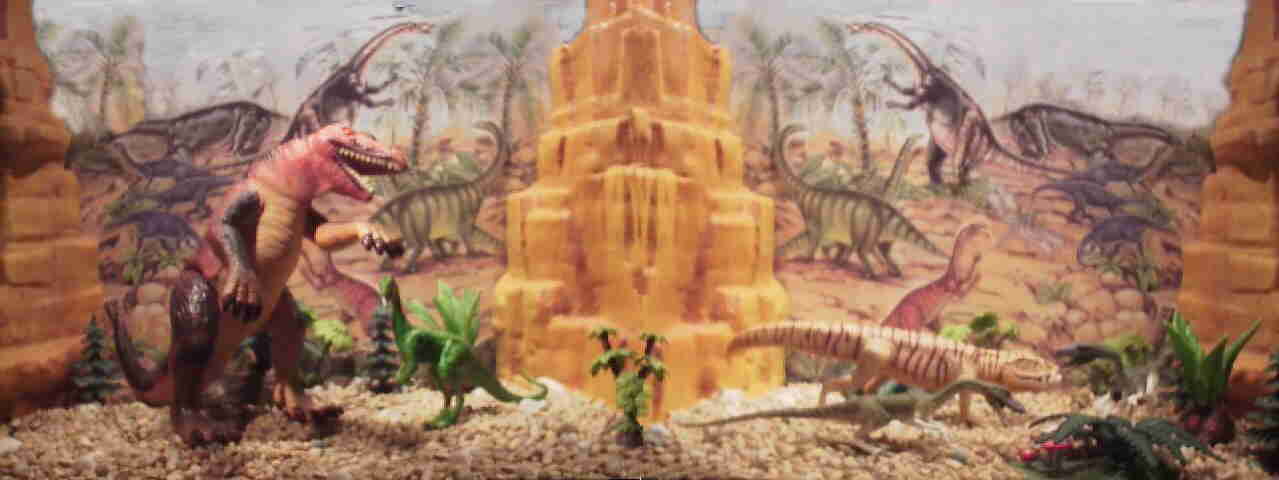
Ornithosuchus from the Thunder Beast by Sky Kids and the Play Vision Coelophysis from their American National History Museum line. Jurassic Park spawned an outstanding line of articulated figures produced by Hasbro. The Ornithosuchus is the WalMart version and the two Coelophysis are poseable.
By the end of the Triassic the climate is dryer and plants are growing higher. Conifers continue to spread. This may have favored prosauropods like Plateosaurus over low slung feeders like Placerias. Prosauropods were once seen as the ancestors of the giant sauropods of the Late Jurassic but recent finds of sauropods in Thailand and South Africa show sauropods present in the Late Triassic. The finds are scrappy and rare but they seem to indicate large animals with bony nodules for armor. While many of the larger Prosauropods were bipedal the newly hatched ran around on four feet moving to two as they developed.
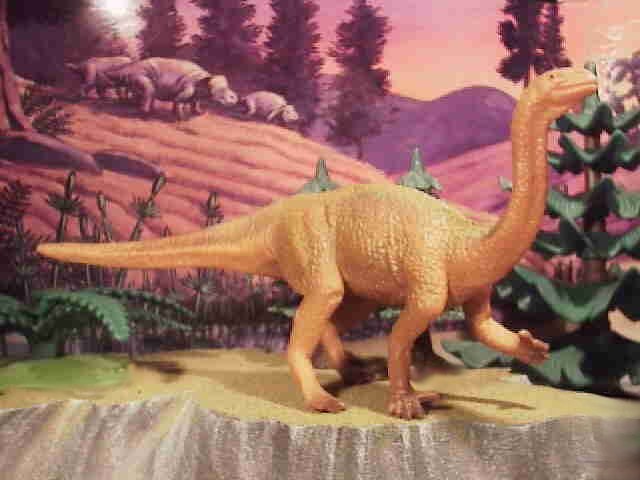
Schleich retired Plateosaurus is posed on all fours unlike most figures.
The rauschid Postosuchus was the biggest carnivore of its time and
Plateosaurus was one of the largest herbivores of its time at 27 feet. There were
numerous similar looking prosauropods the 61/2-foot Anchisaurus
, the 30-foot Euskelosaurus and the 13-foot Massospondylus. One of the
unusual and interesting rauisuchians discovered in recent times is
Postosuchus, from the Triassic Dockum Formation of Texas and made famous in
Walking with Dinosaurs. Postosuchus was 18 feet long and 6 feet tall.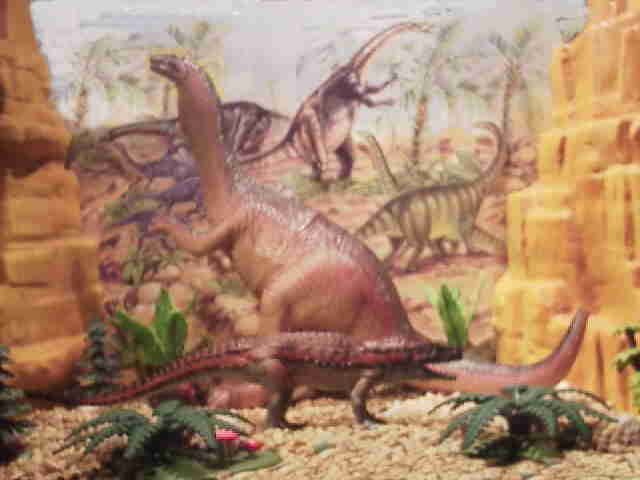
The Postosuchus is from the English Toyway line based on the Walking with Dinosaurs Documentary. The high quality toys were never sold widely in the US. Currently out of production. The Plateosaurus is distributed by Jasman. Jasman and several other toy companies distributed a series of large vinyl figures. The figures may be from several different producers. They appear to represent several different manufacturing processes and vary widely in quality. Plateosaurus is one of the better examples. Most appear have been cast in sections and joined like Plateosaurus, while others appear to be the result single piece of injection molding. All are stamped with Made and in China and the animal name. They remain popular as sand box style figures.
Small ceratosaurs like Coelophysis are more common than originally thought. They seem to fall into the same general body plan varying in size with differences in crests. Dilophosaurus the best known large carnivore doesn't appear until the Jurassic and is just a scaled up version of the same design. At the end of the Early Jurassic the climate gets wetter, plants get bigger and so do dinosaurs. The sauropods come into their own and large carnivores start to show up. Cycadoids start to die out with conifers and cycads becoming dominate. The prosauropods disappear. They were not the ancestors of the giants of the later Jurassic giants but cousins.

Starlux Coelophysis and prosauropod
Go to Mesozoic Home or
 Click on the Site A
icon to the right for Dioramas organized by period or by manufacturer.
Click on the Site A
icon to the right for Dioramas organized by period or by manufacturer.
